Hallo — my name is
Olaf
Small, orange, and delighted to meet you.
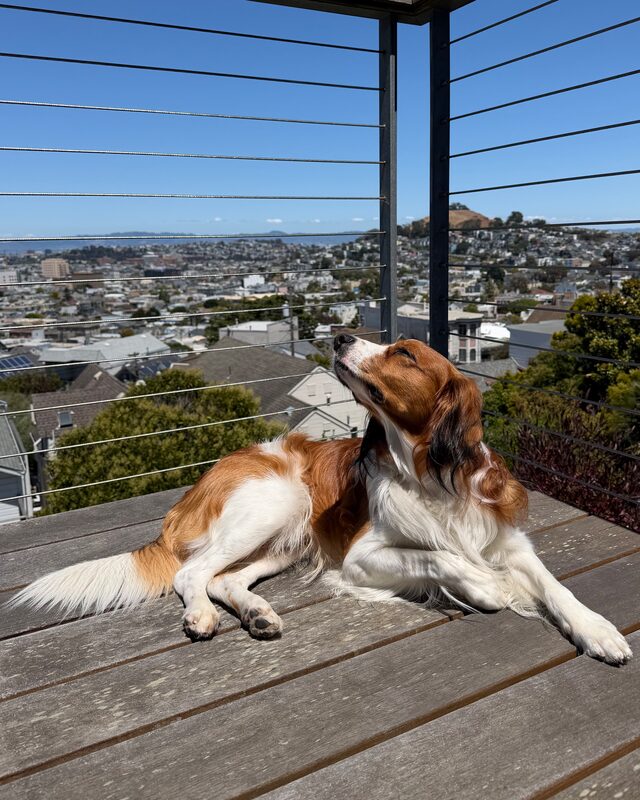
I'm a
Kooikerhondje
Quick facts
- Breed
- Nederlandse Kooikerhondje
- Origin
- The Netherlands, 1500s
- Original job
- luring ducks into traps
- Current job
- being cute
- Size
- just right
- Accessories
- black “earrings”
- Alignment
- chaotic good boy
A little Dutch history
For centuries, dogs like Olaf worked the eendenkooi — quiet ponds ringed with netted canals, built in the Dutch countryside to catch ducks. The kooiker, or decoy-man, would send his small orange-and-white dog trotting along the bank. Lured by the flash of a white-plumed tail, ducks would follow it along a canal, bend after bend, swimming right into the hunter's trap.
Small dogs bearing a strong resemblance to Olaf appear throughout the paintings of the Dutch masters: in the busy household scenes of Jan Steen, and in quieter interiors by Gabriel Metsu and Gerard ter Borch.
By the Second World War, most of the decoy ponds had closed, and the dogs had nearly disappeared with them — only a couple dozen remained. During the wartime occupation of the Netherlands, Baroness van Hardenbroek van Ammerstol set out to save the breed. She sent peddlers into the countryside carrying a photograph and a lock of fur, looking for farm dogs that matched. One of their finds — Tommie, a young female from Friesland — became the foundation mother of the modern breed, and her first litter arrived in 1942. Every Kooikerhondje alive today traces back to this effort.
The decoy ponds are mostly quiet now. The dogs are doing just fine.